
Sex Offender Checks in Refugio County
The Texas Public Sex Offender Registry is the main public channel for Refugio County. Texas DPS maintains the statewide database under Chapter 62. Searchers can use a name or narrow a geographic search to Refugio County, a town, ZIP code, or address and radius when the live interface offers that route. A county filter is often the best first pass. A name search helps when the person may have moved or when an address is not known.
Local responsibility depends on where the person lives. A registrant inside an incorporated municipality ordinarily reports to that municipality's police chief or local authority. A person outside municipal limits reports to the Refugio County sheriff. The local authority verifies and sends the information to DPS. Because those roles differ, the authority shown in a profile is the right place to ask about a Refugio County entry.
The official Texas registry search screen shows the county and geographic tools described here.
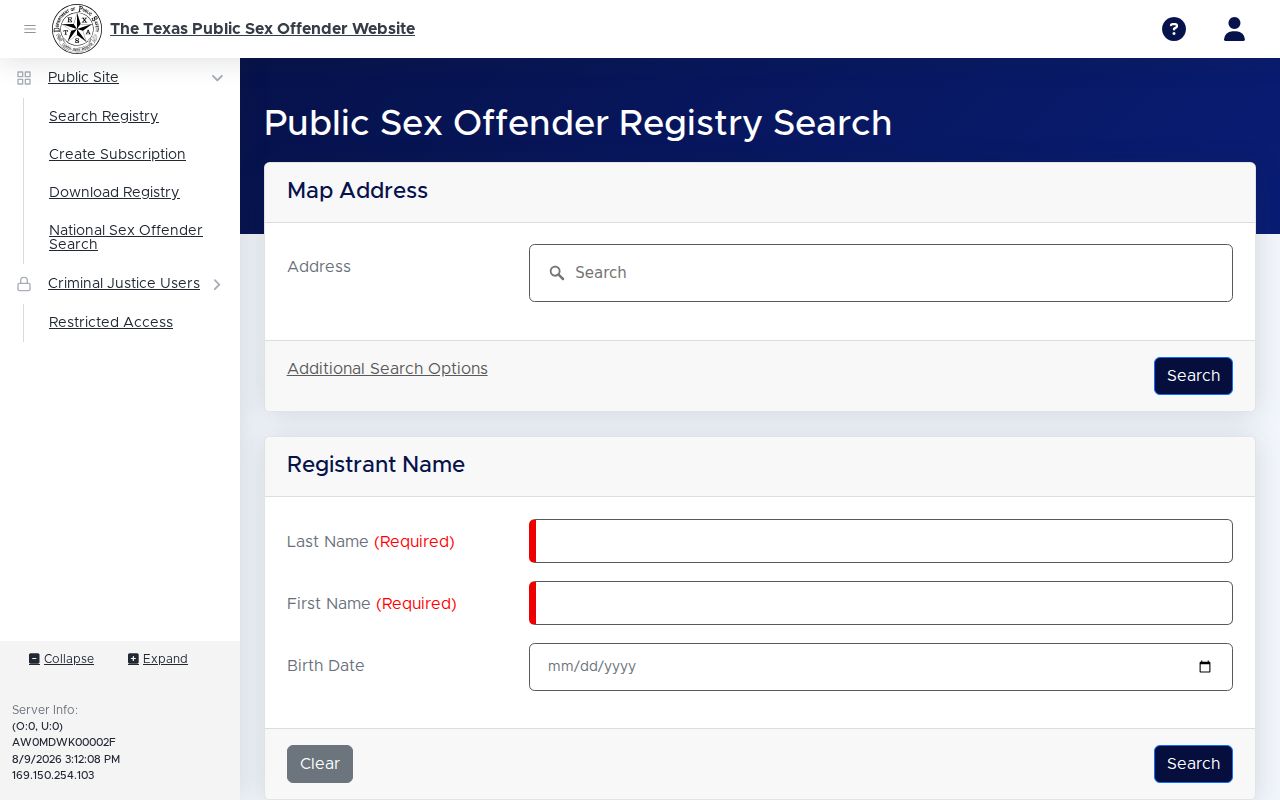
The screen is a starting point, not a substitute for careful identity checks.
How to Search the Texas Public Sex Offender Registry
A Refugio County sex offender search works best when the search route matches what is known. Use the county field for a broad local view. Use a name if the address may be old. Use the map or radius route to check the area around a specific location, if that control is active. Dynamic labels may change, so read the live form before submitting.
- Open the DPS public registry and review its conditions of use.
- Select Refugio in the County field, or enter a name, town, ZIP code, or address and radius.
- Compare possible results by photograph, aliases, age, physical traits, and location instead of relying on the name alone.
- Open the full profile and note the registration authority, status, verification date, offense, and risk information.
The visible search controls can be read as follows.
| Field or control | Type | Required | Use |
|---|---|---|---|
| Last Name | Text | Conditional | Name route; initial browsing may also be offered |
| First Name | Text | No | Narrows a name match |
| County | Dropdown | Conditional | Select Refugio for county scope |
| City or ZIP Code | Text or dropdown | No | Narrows the geographic area |
| Address and radius | Text and selection | Conditional | Creates a proximity search where enabled |
| Search / Reset | Buttons | Search only | Runs or clears the query |
The DPS registration program page explains how local reports become statewide registry data.
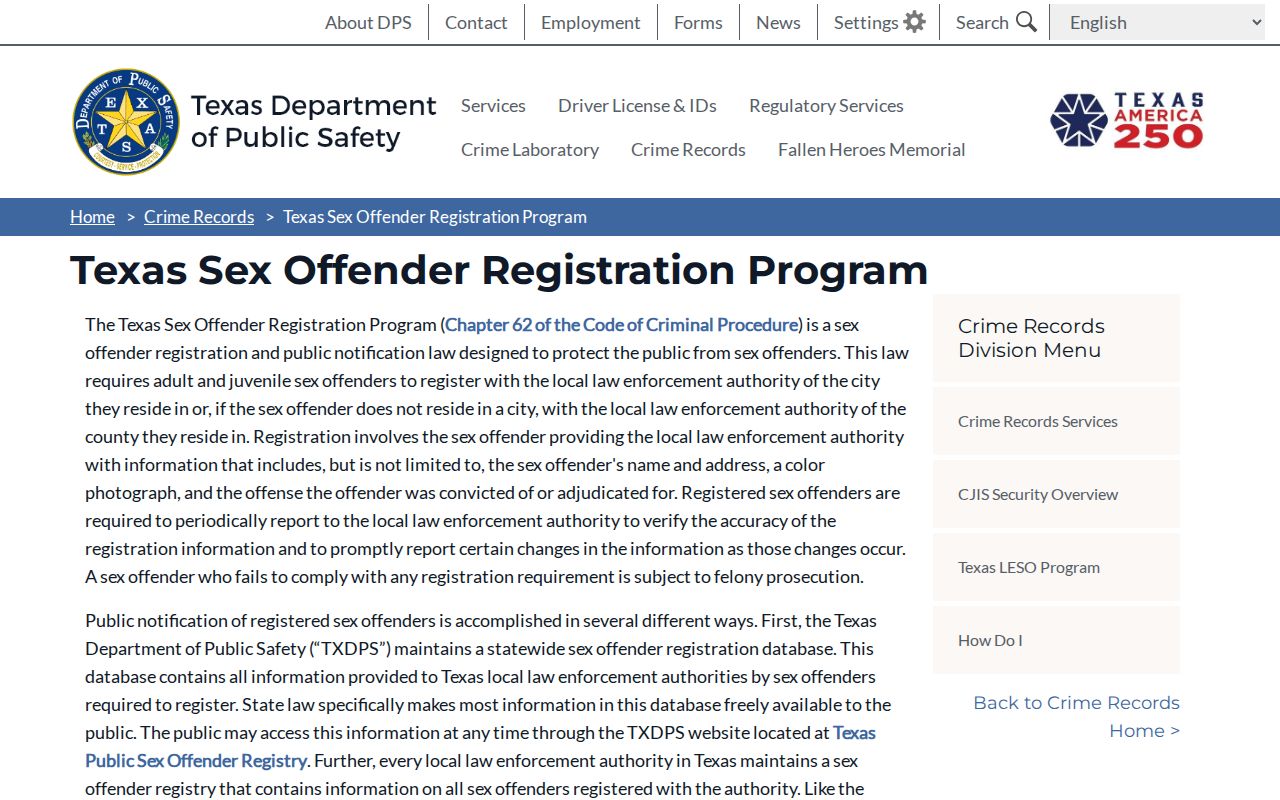
That state-to-local link explains why a Refugio County question may require both DPS and the authority listed on a profile.
No Refugio County Registry Match
No result is not proof that no sexual-offense history exists. A duty may have ended. A juvenile registration may be nonpublic. An offense may not trigger Texas public registration. Data may be in the middle of an update, the person may use a different recorded name, or the person may be out of compliance. A registry also has a narrower purpose than a county criminal court file or a statewide criminal history product.
Try a second route before drawing a conclusion. Remove the first name, check spelling and aliases, widen the location, and search by an earlier city or ZIP code. Use the national system if the person or location crosses a state or tribal border. When a specific Refugio County profile seems stale, contact its named registration authority rather than guessing which office owns the update.
The Justice Department's National Sex Offender Public Website supplies the official cross-jurisdiction layer.
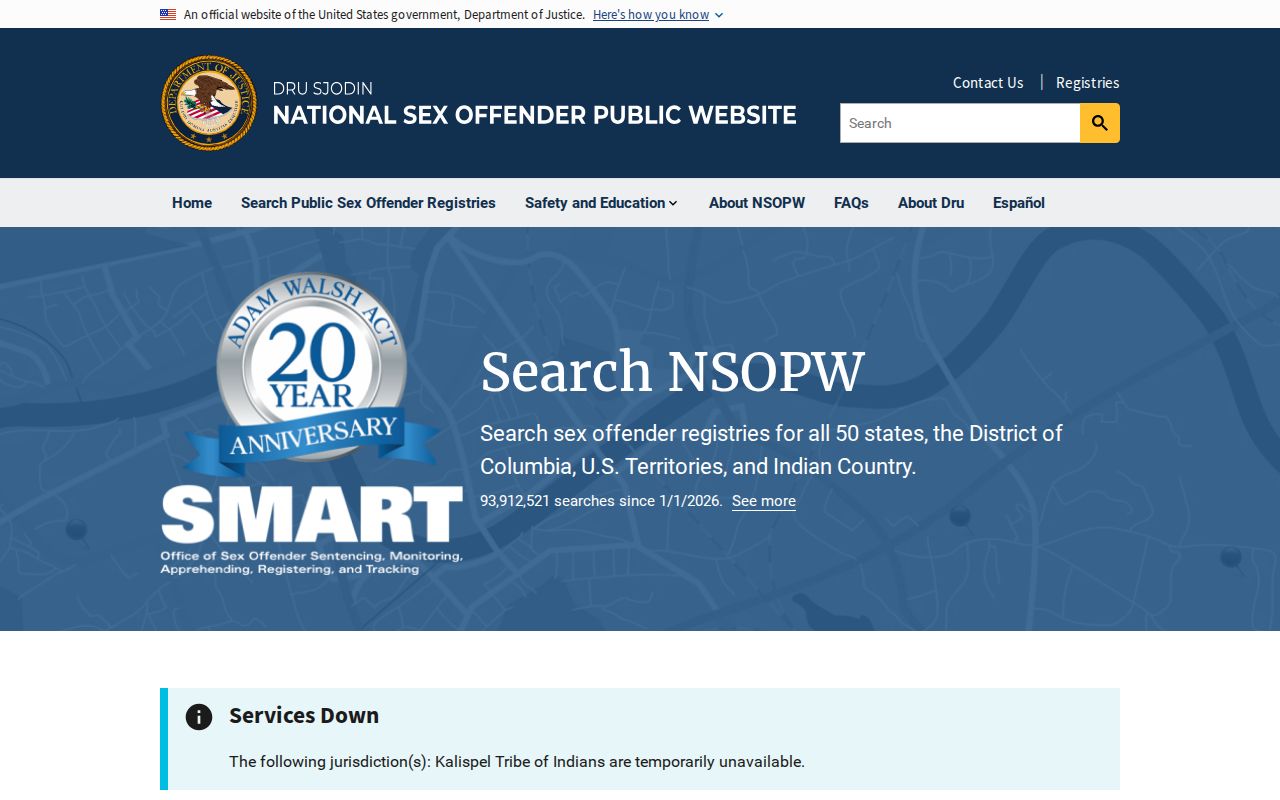
NSOPW is useful beyond Texas, while the DPS profile remains the key source for Texas-specific registration details.
Note: Registry absence answers only the public-registration query; it does not clear a person or replace a court-record search.
Inside a Registry Profile
A public profile combines identity clues, location data, and the legal basis for registration. Read the fields together. A name is weak proof on its own, while a photograph, aliases, birth information, physical traits, and address provide stronger ways to rule a match in or out. The verification date helps show when the local authority last checked the entry.
| Name and aliases | Reported identity names and alternate names used to distinguish a person. |
|---|---|
| Photo and description | Photograph plus sex, race, age or date of birth, height, weight, eyes, and hair. |
| Residence | Public address or geographic residence description, subject to Chapter 62 rules. |
| Registration details | Authority, status, verification date, risk level, and other duty information. |
| Offense record | Offense, statute, conviction or adjudication date, victim age category, and punishment or release data. |
| Other public fields | Aliases and qualifying vehicle information where state law requires public display. |
DPS keeps other fields out of the public view. Those may include Social Security and driver's-license numbers, phone numbers, online identifiers, employer data, and victim-identifying information. A public profile should not be treated as the entire agency file.
Refugio County Profiles and Redactions
Public access has limits built into the Texas system. The profile supplies information that supports awareness, yet it withholds data that could expose victims or sensitive identifiers. Juvenile registration can also be ordered nonpublic. The absence of an employer name, phone number, online identifier, or victim identity is intentional and should not be filled from unrelated commercial pages.
The DPS criminal-history reporting overview shows the broader reporting setting around Texas records.
Registry data and general criminal-history reporting overlap, but neither database replaces the other.
Texas Registration Levels and Requirements
Texas profiles can show low, moderate, or high risk, plus civil commitment where it applies. Those labels describe assessed risk or a distinct court status. They are not the same as the length of registration. Duration may be ten years or life based on the covered offense, event, and Chapter 62 rules. Registration can follow an adult conviction, juvenile adjudication, deferred adjudication, or a condition of parole, mandatory supervision, or community supervision.
| Display concept | Meaning | Duration or visibility |
|---|---|---|
| Low | Relatively low assessed danger within the Texas system | Public when Chapter 62 requires display; duration comes from the qualifying duty |
| Moderate | Intermediate assessed risk | Public under the same statutory rules; not a duration label |
| High | Serious danger with expected continued criminal sexual conduct, as DPS defines it | May trigger direct community notice; duration still depends on the duty |
| Civil Commitment | Court-designated sexually violent predator under treatment and close supervision | Distinct from the low-to-high assessment labels |
| Ten-year duty | Many non-lifetime adult duties | Often ends ten years after the latest qualifying discharge or release event |
| Lifetime duty | Enumerated sexually violent and repeat or reportable categories | Continues for life when Chapter 62 requires it |
Texas registration began in 1991 and later reached qualifying convictions and adjudications dating to 1970 under specified conditions. Out-of-state, federal, military, or foreign offenses may also create a duty when they are substantially similar or the other jurisdiction requires registration.
Refugio County Residence Rules
Texas does not impose one universal statewide distance buffer solely because a person must register. A claim that every Refugio County registrant must remain a fixed distance from every school, park, or day care would overstate state law. Separate supervision terms or a valid local rule may restrict a particular person or place. Read the actual order and current local authority instead of applying a blanket number.
The controlling Texas Code of Criminal Procedure Chapter 62 sets the statewide registration framework.
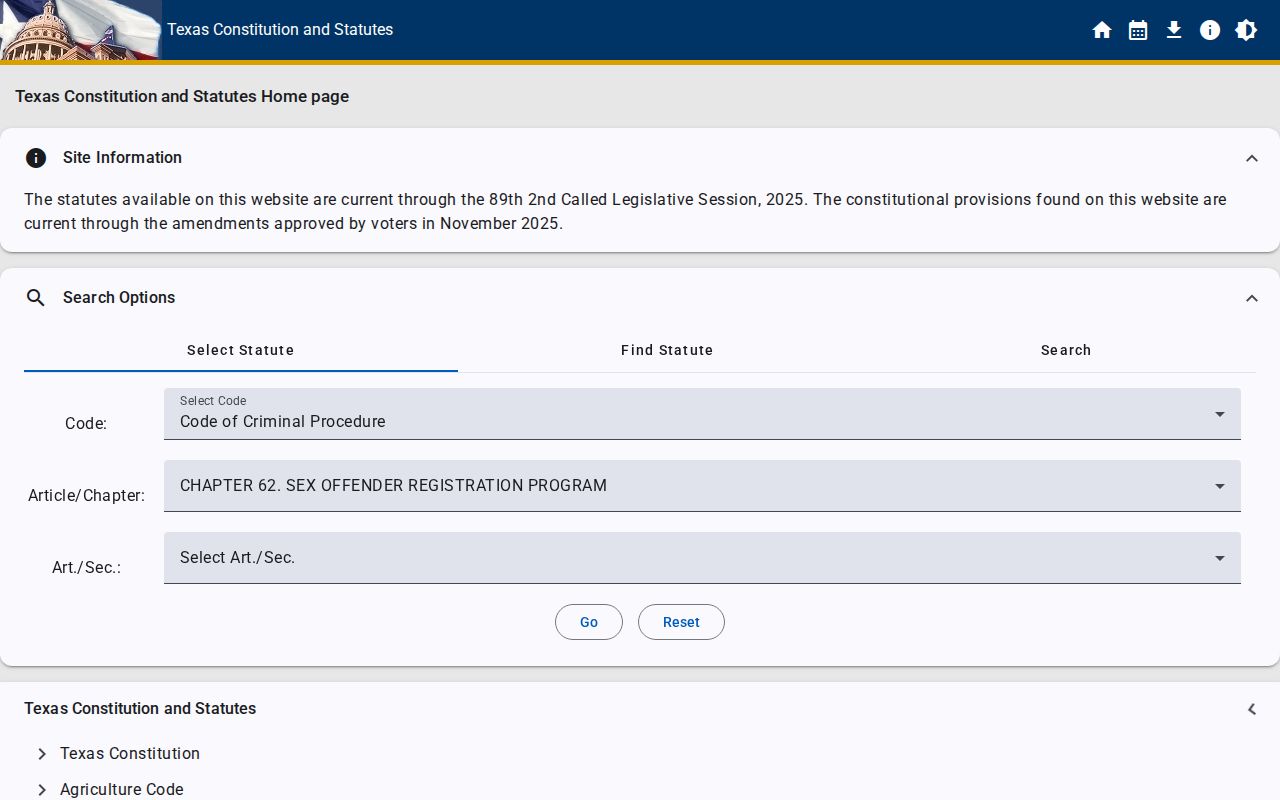
The statute is the right source for the duty, while a court or supervision agency controls a person's separate conditions.
Community Notification and Lawful Use
Registry access exists for public safety and informed awareness. It does not grant permission to threaten, harass, injure, stalk, or commit another offense against a registrant or family member. Search results also need context. Registration can stem from several legal events, and a profile must be read as the state presents it rather than recast as a private punishment.
Use Refugio County registry data lawfully: Chapter 62 warns that using public registration information to injure, harass, or commit a crime can create criminal exposure.
Community safety starts with accurate identity work and calm reporting. Save the official profile details, contact the listed authority with a focused question, and let law enforcement assess noncompliance. Never rely on a screenshot that lacks a date or cuts off status fields.
Note: A public registry result supports awareness, but only the originating authority can confirm the most current Refugio County status.
Refugio County Community Notification
DPS sends notices in English and Spanish to the immediate community when a high-risk registrant or civilly committed sexually violent predator is released or moves. This direct notice is separate from a routine public search. The local authority still gathers the registration and routes updates to DPS, while the statewide system publishes the covered fields.
For a possible compliance problem, note the exact profile, address, status, and verification date. Contact the registration authority shown on the profile. Do not confront the person or household. A status can change, an address may lie on the other side of a municipal boundary, and a searcher can misread a similar name.
The DPS index of related criminal-record laws connects the registry to its governing rules.
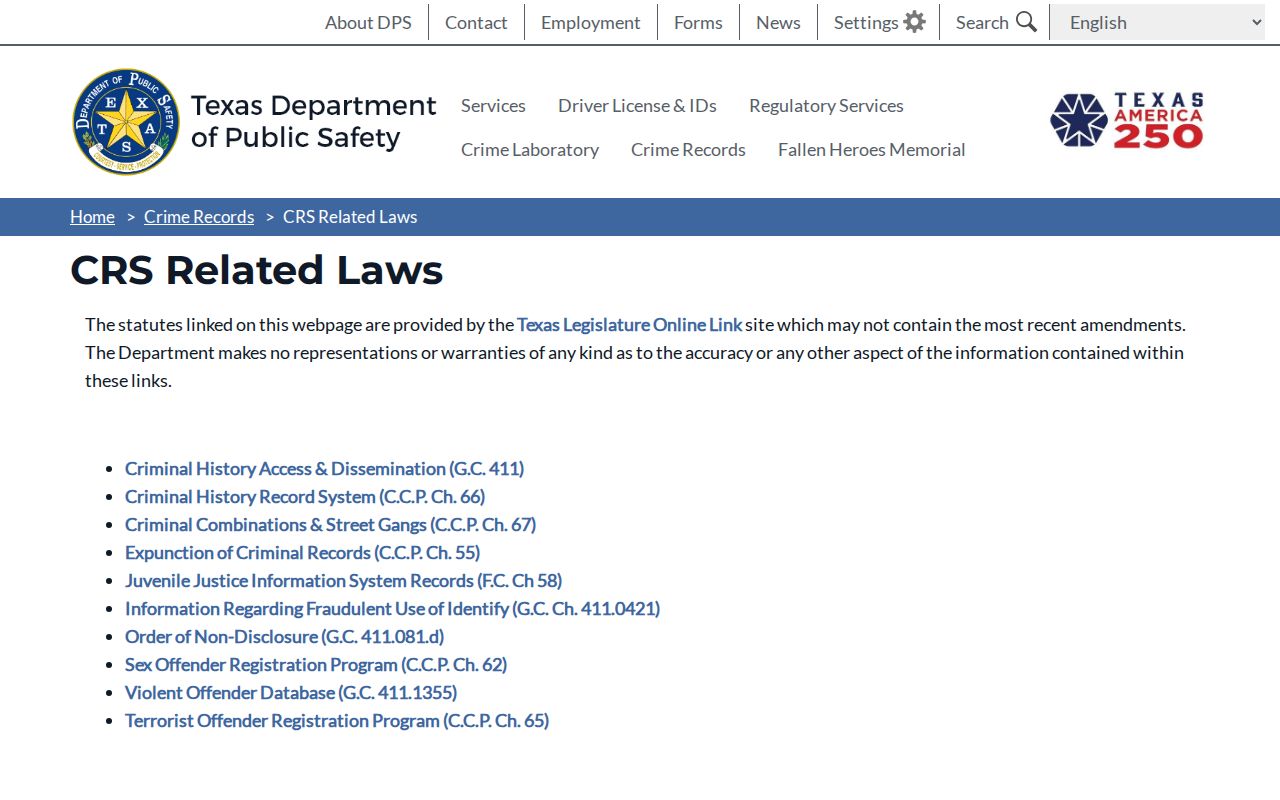
Official law and the profile's named authority are safer sources than a reposted or undated list.